Live context
Quick facts
- The Roman theater in Caesarea, built in the 1st century CE, could accommodate approximately 3,500 spectators and is one of the best-preserved theaters in the region.
- Caesarea's aqueduct, constructed by King Herod around 22 BCE, originally stretched over 10 miles and was designed to bring fresh water from the Carmel Mountains to the city.
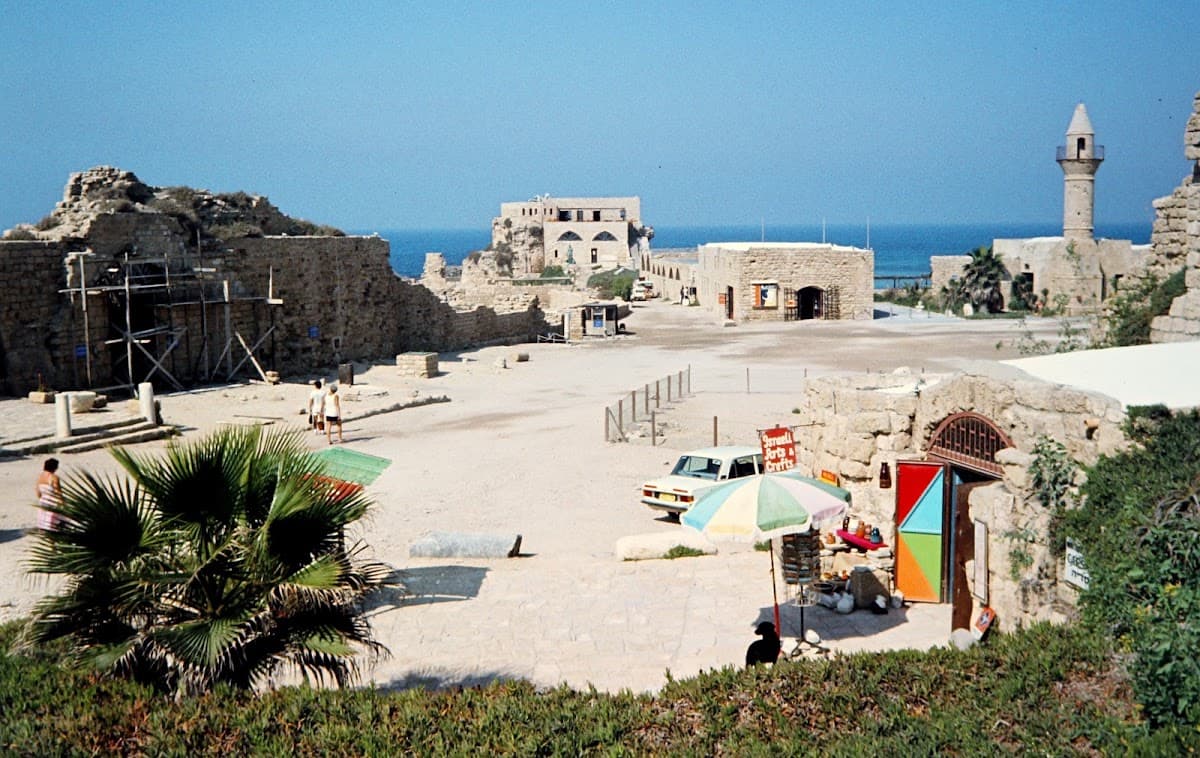
- The Crusader walls that frame the harbor date back to the 12th century and were part of a massive fortification project initiated by the Knights Hospitaller.
- In its prime, Caesarea was a bustling port city and served as the capital of Roman Judea, with a population that may have reached around 100,000 inhabitants.
- The archaeological park in Caesarea includes remnants of a Byzantine church, showcasing a mosaic floor that dates back to the 5th century, depicting various geometric patterns and Christian symbols.
Travel details
- Country
- Israel
- Wind (now)
- 12 km/h
- Humidity (now)
- 60%
- Coordinates
- 32.5018, 34.8944
Share this destination
Share Caesarea, Israel with friends or save it for later.
Want to embed this destination on your site?
Get embed code →Related destinations
Haifa & Mount Carmel, Israel
A beautiful port city where the Bahá'í Gardens' terraces cascade down Mount Carmel, offering stunning sea views and a symbol of peace. A city of coexistence and natural beauty.
Nazareth & Lower Galilee, Israel
Sacred stone alleys of the Old City open onto green Galilee hills, markets, and villages where olive groves and biblical landscapes still shape daily life.
Tel Aviv, Israel
A vibrant beach city where Bauhaus architecture lines tree-shaded boulevards, world-class restaurants serve late into the night, and Mediterranean beaches offer year-round sun. The non-stop city.
Akko (Acre), Israel
An ancient port city where Crusader halls lie beneath the old town, a vibrant market fills narrow alleys, and the Mediterranean provides a stunning backdrop. A UNESCO World Heritage site.